Lord ayyappa refer also (or) manikanta (or )sasta( or) sabari(or)hariharasudhan (or ) dharmasastha is one of the famous deity for hindu religious people in India especially south indian people worship ayyappan one among the most important annual pilgrimage sites within the world with an estimate of over 40 to 50 million devotees visiting per annum . The temple is devoted to a Hindu celibate deity Ayyappan also referred to as Dharma Shasta, who consistent with belief is that the son of Shiva and Mohini, the female incarnation of Vishnu. The traditions of Sabarimala are a confluence of Shaivism, Shaktism, Vaishnavism, Some millions of hindu religious male people even kids to old man taken deeksha( or) vratham 41 days The temple attracts millions of visitors every year during mandala season from mid November to mid January.sabarimala is one of the major hindu pilgrimage center
Temple of ayyappa not open through out the year , temple is open only few days in a month
LOCATION
The Śabarimala or ayyappa Temple is a temple complex located at Sabarimala inside the Periyar Tiger Reserve forest in the Perinad Village, Pathanamthitta district,state of Kerala, in India, sabarimala located in southern part of India, it also located sahyadri ranges in western ghats of India
LATITUDE AND LONGITUDE
9.4375 East latitude
77.0805 North longitude
MSL( OR ) ELEVATION
Elevation or mean sea level of sabarimala is 1260 meter or 4134 ft above sea level
CLIMATE
Sabarimala enjoys a tropical climate and differences due to the season in temperature aren’t extreme. The weather in Sabarimala are often classified as summer, winter and monsoon. The weather in Sabarimala is pleasant throughout the year and thus the day – time temperature varies according to differences thanks to the season .
The typical maximum temperature recorded in Sabarimala is during a range of 20 – 37º Celsius.
The climate of Sabarimala is at its best during November to February.
The summer in Sabarimala – March to May – usually records a maximum of 40º Celsius and a minimum of 24º Celsius.
High humidity is additionally recorded which during a range of 66 – 90%. Occasional showers help to stay the temperature in restraint .
The monsoon months in Sabarimala are from June to November, with a mean annual rainfall of around 130 cm. Monsoon in Sabarimala consists of South – West monsoon (June to September)
North – East monsoon (October to November). Sabarimala receives 75% of annual rain fall during South – West monsoon.
The temperature in monsoon months vary in between 27 – 20º Celsius. The winter season in Sabarimala is during December – February when the utmost temperature is around 25º Celsius the minimum at about 19º Celsius.
Days are pleasant with cool salubrious winds and thus the nights are cold during winter in Sabarimala. November to January is that the best suited time to go to Sabarimala. this is often also the height pilgrim season in Sabarimala.
This pilgrim centre also attracts substantial tourists during the months of April and September.
BEST VISITING MONTHS
November to february
april to sep
LOCAL LANGUAGE
Malayalam
BIRTH OF AYYAPPA
MOHINI
There is an enormous confusion regarding the identity of Ayyappa. many of us think that he’s a son of Shiva and Vishnu, which is merely partially correct.
Lord Vishnu has taken just one female avatar which is that the divinely beautiful Mohini, which incidentally means ‘The Desirable One’.
Lord Vishnu assumed this type to kill Bhasmasur who might be killed only by stealth. He took his Mohini form once more during the churning of the Milk Ocean to get the Nectar of Immortality. For the record, it had been Lord Shiva and Mohini who had a toddler named Dharmashastra.
He was born to fulfil the boon that Mahishi had acquired from Lord Brahma that only a son of both Shiva and Vishnu can kill her. His name and therefore the story of His birth is explained intimately within the Bhagavata Purana.
Dharmashastra manifested Himself in various forms – as Ayyanar, as Ayyappan, and as Himself. Prince Manikantan of Pandalam (Sabarimala Ayyappan) was the precise avatar He took to kill Mahishi.
KILL MAHISHASURA
So while Dharmashastra finds a mention within the Puranas, it’s unlikely that Ayyappa would even be mentioned as Ayyappa’s birth happened a few years after the Puranas were compos
ABOUT AYYAPPA
The kingdom of Pandalam where god Ayyappan originated.The royalty was childless. at some point the king of Pandalam found a baby boy during a forest.
The king carried the baby to an ascetic within the forest to inquire about the boy. The ascetic advised the king to wish the baby bring home , raise manikanta like his own son, which in 12 years he would discover who the baby was.The royalty did so, naming the baby Manikantha.
Ayyappan, also called Hariharaputra, is believed to vary state from the union of Shiva and Mohini.
At age 12 of ayyappa, the king wanted to formally invited Manikantha because the heir prince (yuvraja).
However, the queen of kingdom under the influence of an evil minister objected. The minister had advised the queen that only her younger biological child should be subsequent king.
The younger child was disabled and lacked the power to perform the duties of the king, something that the scheming evil minister thought would make him the de facto ruler.
The minister persuaded the queen to feign an illness, invite “tiger’s milk” to cure her illness and demand that Manikantha be sent to forest for the milk .
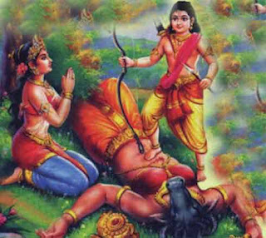
Manikantha volunteers, goes into the forest and returns riding on a tigress. The king, realising Manikantha have special ability recognizes the adopted son to be a divine being, resolves to form a shrine for him.
For location, Manikantha shoots an arrows that lands thirty kilometers faraway from where he’s . The young boy then transforms into Ayyappan. The place where arrow of ayyappan landed is now there Ayyappa shrine, a site of a big pilgrimage that’s particularly popular for visits on Makara Sankranti (about January
ABOUT AYYAPPA TEMPLE
AYYAPPA TEMPLE IN SABARIMALA
The Sannidhanam (main temple) is made on a plateau about 40 feet high
The temple was rebuilt after arson and vandalism in the year of 1950. No charges were brought and therefore the earlier stone image of the deity was replaced by a panchaloha(an alloy from five metals) idol, about 1 and half feet.
The temple consists of a sanctum, sanctorum of the temple with a gold-plated roof and 4 golden finials at the highest , two mandapams, the balikalpura which houses the altar. In 1969, the flag staff (dhwajam) was installed.
The shrine of Kannimoola ganapathi prathishta is south-west side to
The Sreekovil of the Sannidhanam. every Devotees offer a part of the broken coconut (Neythen Ga) to the fireside (Azhi). Ganapathi homam is that the main offering.
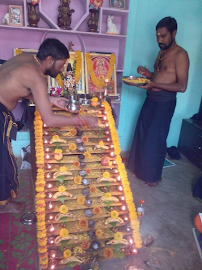
The Pathinettu thripadikal or the 18 sacred steps is that the main stairway to the temple. As per the custom followed,
who want to go in to the temple through the steps they should have “Irumudikettu” can ascend the 18 sacred steps. In the year of 1985, the 18 steps of temple were covered by Panchaloha metal. The northern gate is open for those that don’t carry an “Irumudikettu”, ]
The temples of Lord Ayyappan’s trusted lieutenants Karuppu Sami and Kadutha Sami are positioned as his guards (kaval) at the foot of the holy 18 sacred steps.
ABOUT 18 STEPS
STEPS IN SABARIMALA
18 steps – part of the ritual Lord Ayapana devotees who visit the Sabarimala shrine need to climb up 18 steps to the sanctum sanctorum, all the while chanting the Pathinettam padi (song of the 18 steps).
The climb has rules: Every devotee of ayapana must begin with their right foot.
Only those that have undertaken the 41-day penance — which involves abstinence from all worldly pleasures — are allowed to ascend the 18 steps
On their thanks to the temple, Ayapana devotees must carry the”irumudi” a little black cloth bundle that consists of puja items (or) personal possessions sort of a change of garments and something to eat like dry fruits, on their head.
The 18 steps have considerable religious significance. Devotees believe that ascending these steps helps detach them from worldly desires, mentally and physically.
The first five steps are called panchedriyas: They symbolise the five human senses of sight, sound, smell, taste and touch.
Next come the eight steps of the ashtaragas. These signify emotions: Krodh (anger), Kama (love), lobh (greed), moh (lust), asooya (jealousy), dhoom (boastfulness), madha (unhealthy competition) and matsarya (pride). It is believed that climbing up the steps while chanting helps control emotions that cause pain within the world.
The trigunas, subsequent three steps, represent three human qualities, satva (goodness or purity), rajas (passion) and tamas (inertia or dullness).
The last two steps represent vidya (knowledge) and its opposite, avidya (ignorance).
The steps were originally of granite, but later covered with panchaloha, a special mixture of gold, silver, copper, iron and tin.
The steps are believed to be special for other reasons too. For one, Ayyappa was a master of 18 weapons — each step is devoted to every of these weapons, which Ayyappa is believed to possess finally surrendered at the “pathinettam padi” or the eighteenth step.
Some also believe that the steps represent the 18 hills around Sabarimala, of which the very best is that the one the temple stands on
RITUALS IN TEMPLE
Mandala kaalam
The pilgrimage to Sabarimala starts from the primary day of Vrischika month of Malayalam year (month of Scorpio) and ends on the 11th day of Dhanu month (the Month of Sagittarius). This season of 41-days pilgrimage is understood as Mandala kalam (season) . The season is within the months of December and January
Harivarasanam
Harivarasanam is recited before closing the temple door nightly . The Harivarasanam prayer, which is sung at Sabarimala may be a Urakku Pattu. it’s composed by Kambangudi Kulathur Srinivasa Iyer in Sanskrit. it’s said that Srinivasa Iyer wont to recite the composition after the Athazha Puja, standing ahead of the shrine of Ayyappa within the main temple. With the efforts of Swami Vimochanananda, it came to be accepted because the lullaby by the Tantri and Melsanthi. The composition has 352 letters, 108 words in 32 lines in 8 stanzas
Though there are many versions of this song sung by many renowned vocalists, the temple plays the rendition by K. J. Yesudas, composed by the renowned conductor G. Devarajan, which is within the Madhyamavathi raga of Indian Carnatic music.
Neyyabhishekam
This significant ritual involves pouring sacred ghee brought by pilgrims in their Pallikettu or Irumudi (a two compartment bag made from handwoven cotton wont to carry the offerings for Sabarimala Temple carried on their heads) on the idol of Lord Ayyappa. It symbolically means the merging of Jeevatma with the Paramatma. While a red-colored irumudi is employed by a pilgrim on his first journey as a Kanni Ayyappan to Sabarimala, others use dark blue till third year and thereafter saffron colored irumudi.
Makaravilakku
Lord Rama and his brother Lakshmana met Sabari, a tribal devotee, at Sabarimala. Sabari offered the Lord fruits after tasting them. But the Lord accepted them gladly and whole-heartedly. The Lord then saw a divine person doing tapasya. He asked Sabari who it had been . Sabari said it had been Shasta. Rama walked towards him. Shasta stood up and welcomed the Prince of Ayodhya. The anniversary of this incident is widely known on Makara Vilakku day. it’s believed that on Makara Vilakku day, Lord Dharma Sastha stops his tapasya to bless his devotees. The day is additionally called Makara Sankranti.
Aham Brahmasmi and Tatvamasi
The most important message written at the temple façade is one among the four Mahāvākyas of Advaita or the non-dualistic school of philosophy. Tat Tvam Asi, the 3rd of 4 Mahavakyas which in sanskrit translates to “Thou Art That” is that the principle philosophy that governs the temple and pilgrimage. because the pilgrimage is symbolic for the journey to self-realization that each one living beings possess the essence of Brahman, pilgrims ask one another as Swami, acknowledging their divinity.[citation needed]
It means, in short, you’re a part of the Paramatma which is that the quintessence of Advaita philosophy.[citation needed]
Aravana Payasam at sabarimala
The prasadam at Sabarimala temple is Aravana payasam and Appam. These are prepared by using rice, ghee, sugar, jaggery etc. The rice needed to organize the prasadam at Sabarimala temple is supplied by Chettikulangara Devi Temple, the second largest temple under the Travancore Devaswom Board situated at Mavelikkara. The Chief Commissioner, Travancore Devaswom Board said that the board has appointed Central Food Technological Research Institute, Mysore as a consultant for providing technical guidance to make sure the standard of Aravana, Appam and other prasadam preparations at Sabarimala temple.
AYYAPPA DEEKSHA OR VRATHAM
ABOUT AYYAPPA DEEKSHA
Ayyappa deeksha or vratam followed by many people in India especially south indian people practice ayyappa deeksha, some millions of people are practice deeksha or vratam ,every year once even small children to old men, this deeksha mainly only men s are practice
MY FRIEND IN DEEKSHA
Devotees must and will follow 41 days ritual. Devotee wears Ayyappa Mala, shouldn’t wear footwear, must wear black clothes. (There’s a story for this deeksha. I’ll explain it in below paragraph) then here the solution for the question.. On 41st day, devotees who ever is following 41 days rituals, visit nearest Ayyappa temple, after the Pooja, Guruswamy (head priest of the temple) ties Irumudi. Iru means 2 and Mudi means knot.
1.ABOUT IRUMUDI
One bag contains 2 pouches. One side they fill with coconuts crammed with pure ghee. Guru Swamy make a hole for one among the coconut pore. Fills a ghee into holed pore and a few other Pooja items like incense sticks, camphor, sandal powder, Vibhuti, Vermilion etc.
In another pouch, they fill pouch filled with raw Rice which devotees will consume by cooking it while trekking 18 hills of Sabarimala from Ermelo.
Devotees will carry it on their head and visit Sabarimala. After Ayyappa Darshanam, devotees will deduct the ghee coconut, break it and collect the ghee inside one container and provides it to temple. Tantri will do Abhisheka with the ghee which devotees brought by Irumudi.
2.Ayyappa Deeksha are as follows-
Story why devotees should follow strict rituals while mandala deeksha (41 days of wearing Mala) :
Once Lord Ayyappa meet Lord Shani and questions why he punishes human so cruelly? Shani replies, that’s his job as he’s a Karma Phala Dātha. Ayyappa requests Shani to not punish his devotees which Shani declines it. Then Ayyappa tells tells that his devotees will maintain strict rituals for 41 days while they wear Ayyappa Mala.
The Deeksha Should be taken for 41 days or more but not but 41 days.
This features a reason coz if you see any Ayurvedic Treatment it’ll be for 41 days. The Deeksha what we do is strictly of ayurvedic Treatment. And our body and mind are trained for 41 days with a routine will generally become a habit, and our habits become our behaviour and our behaviour becomes our character. So if one is taking deeksha and following all rules are going to be good and can benefit to society. One will get transformed from inside if one is basically following all the principles of deeksha.
we should always keep our Mind with purity and control our feelings altogether aspects.
This works in synchronisation with the concept why we call everyone as swamy only. it’s an idea of seeing everyone as Swamy himself and provides due reference to him. it’s a process of removing the I (ego) factor. an equivalent principle applies why swamy should bow to a different swamy. If swamy’s are having a pure and clean mind, the ego will vanish and where ego vanishes, there divinity reflects.
we should always awaken at 4:00 A.M(Brahma Gadiya)
This is the time when the whole nature are going to be peaceful, one can feel the subtle vibrations of the prayers done everywhere the universe and obtain synchronised with those vibrations and over practice can get himself elevated to higher planes within the path of spirituality. because the day proceeds there’ll be various sorts of disturbances around, which can not allow the person to attach to the vibrations around him within the nature. it’s the proper time for meditating upon god during a choice which the person likes.
we should always perform pooja twice during a day Before sunrise and After sun set.
This has scientific approach if you inhale the Camphor during early Hours your sinus are going to be clear. These are the days , when an individual mind can get distracted and if trained to participate within the pooja activity can slowly specialise in Swamy through which one slowly learn to regulate the mind and master the mind.
3. ABOUT MEAL
We should take meal just one occasion during a day and night we should always take only Tiffin(Eka Bhukta)
It cleans our Pancreas,Liver,Stomach. consistent with ayurveda, an individual who eats once each day may be a yogi, an individual who eats twice each day is bhogi, and an individual who eats thrice each day is rogi. we should always eat to measure , not live to eat. The deeksha may be a tool to understand thyself. during this process it’s essential to survive ourselves, so we should always take minimum food sufficient to stay the body active, and not overburden it in order that it makes us affected with diseases.
Who ever calls us for Bhiksha(Meal or Tiffin) we should always attempt to attend and will never say no, Irrespective of caste and religion, shouldn’t discuss the food what they keep, as Food is that the another Depiction of Para Brahma.
Swamy is that the embodiment of dharma and he’s the authority for purnatwam (Purnam) and pushkala team(Pushkalam). So an individual taking swamy deeksha are going to be blessed abundance and completeness. If one has got to be blessed, one should take the prasadam of Swamy. Prasadam of swamy has got to be taken therein sense only not considering the caste,creed,religion,race, status etc of the person. Getting food may be a great blessing in disguise, only those that are fortunate will get the prasadam of swamy.
These are the 18 Sutra’s for deek
We shouldn’t eat Non-veg,Onion’s(Food Prepared with Onions),Garlic,Road sidefood.
This is because, the food we eat will reflect on our thought process. There are basically 3 sorts of gunas , Sattvic, Rajasic and tamasic. and therefore the foods who prepare them and intake them are reflected by their respective gunas.
Sattvic foods are light and straightforward to digest.—They bring clarity and perception.—Sattvic food has the potential to unfolds love and compassion within the individual.—Sattvic food promotes the qualities of forgiveness and austerity.it gives a sense of contentment.
Raja sic foods are hot, spicy and salty.—They are irritants and stimulants.All morish or tempting foods come under the category of raja sic
Heavily spiced foods e.g. hot pickles and chutneys which may stimulate the senses.Raja sic foods make the mind more agitated and vulnerable to temptation.The mind can become more rajasic, which suggests it tends towards anger, hate and manipulation.
Tamasic food is heavy, dull and depressing.It induces sleep.Under this category comes meat , lamb, pork, beef, also as thick cheese
Old and rancid food is additionally tamasic.Only when an excessive amount of of it’s eaten, it causes the dulling Under Construction moderation, tamasic food is taken into account as grounding and promotes stability.
One should choose only sattvic food during the deeksha period.
9) we should always eat Food prepared by ourselves or By Other swamies or our people that did bath and ready sacredly.
This has reason as Road side food and unhygienic food aren’t knowing http://Eat.As mentioned within the above rule, swamy’s should eat food prepared by other swamy’s or who are cooking with clean body and clean hearts
4. ABOUT BEHAVIOUR
Swamy’s shouldn’t scold anybody , shouldn’t lie.
When we are seeing everyone as a sort of Swamy, in what way can we abuse or scold that specific sort of Swamy, or to whom we are lying. this is often to find out and identify the truth that everything is permeated by swamy only.
we should always call each and each person as Swamy(Males) and Amma or Matha for females.
This is the primary step to understand Swamy, we train the mind to ascertain every male as a sort of swamy and to ascertain mother in every woman.
5.AVOID THINGS
Please note that we should always stop smoking ,Drinking, Chewing Pan, Gutkha and every one bad habits.
This is always good. Bad habits are a symbol of mental weakness. To become mentally strong, one should quit these habits. By leaving them one will practice self control. Indirectly one will get confidence over himself, and slowly this may lead him to the trail of success in his personal life. So leaving the bad habits is that the initiative in transformation of an individual leading him to happiness and success.
6.ABOUT HAIR OIL
We shouldn’t apply oil to our hair.
This is good whatever Dandruff you’ve got it’ll be cleaned. this is often again in synchronisation of seeing Swamy everywhere by getting victory over the ego (I) factor. Swamy’s should have less body consciousness and will convert their ego. Should be ready to accept everyone as Swamy without considering their external appearance.
7.ABOUT BATHING
Should Take Head bath Twice during a day with cold Water.
It keeps our selves Fresh and that we are going to be very Active it are often experienced. Doing head bath with cold water makes the body and mind fresh and it helps in controlling the mind through the body. Mind always asks for comforts(like hot water), and by doing the cold water bath, we are winning over our mind. And as also word given by Swamy to Shani deva, swami’s taking deeksha should haven’t any comforts during their deeksha days.
8.ABOUT SLEEP
we should always sleep on floor.
This has scientific approach as earth is big magnet thanks to magnetic lines forces and planetary motion it gives physical ailments like body pains, spondylitis etc. relief. We shouldn’t sleep within the Afternoon.
Deeksha is to form us be on top of things of senses and convert the ego in realising the supreme Reality (Tat Twam Asi). to realize this, one should follow the sattvic path, sleeping in other times like afternoon may be a tamasic path, and can disturb the body composition and routine of a swamy.
9. ABOUT HAIR CUT
We shouldn’t Shave,No Hair Cut,no Cutting of Nails
This is again in synchronisation with what swamy had given word to shani deva that swamy’s will have minimum comforts during their deeksha period. Also swamy’s should convert their ego and will be ready to accept everyone because the sort of swamy.
10.A.BOUT FOOTWEAR
We shouldn’t wear Foot Wear.
This features a scientific approach , this provides acupuncture to the body which controls vital sign . Also when swamy’s attend sabarimala, it’s a completely hill area and forest area. One cannot travel in those areas with footwear, and accordingly it’s needed to travel barefoot. So these 41 days swamy’s train their body and feet to face up to all the environment of Capitol Hill areas and therefore the forest regions.
11.A.BOUT CLOTHS
Swamy’s shouldn’t wear the other coloured clothes except black
(Even Guru swamis they ought to wear black clothes coz, Ayyappa gave his words to Lord Sani i,e.Sanieshwar, ” who ever takes my(Ayyappa) deeksha u shouldn’t trouble them and will excuse them(We) for this they(We) will wear only Black colour dress as your(Sani’s) Favorite colour is black ” , this is often having one scientific approach as black coloured objects absorbs more heat which provides necessary heat to face up to the temperature around during the season of karthik and margasira)
13.HOW TO REACH
By rail :Pilgrims reach kottayam or chengannur by he rail and from there to road journey to -pampa
By air:pilgrims can reach thiruvananthapuram or cochin air port and from there by road to pamba
ByRoad:– KSRTC has started bus services to Coimbatore, Palani and Thenkasi from Pampa for the convenience of Sabarimala pilgrims. Besides, the Government of Tamil Nadu and Karnataka have been given the permission to operate buses to Pampa. A chain service exists between Pampa and Nilackal base camps.given the permission to operate buses to Pampa. A chain service exists between Pampa and Nilackal base camps.
need any information contact admwondersindia@gmail.com
up dates
Sabarimala: The famous hill shrine of Lord Ayyappa here will open for mandala pilgrimage on November 15 and devotees will be allowed entry from the next day, with strict compliance to the Covid-19 safety protocol.
The installation of the newly appointed chief priests (melsanthi) will also take place on November 15, but this ceremony is out of bounds for devotees.
The new priest appointees are V K Jayaraj Potti of Kodungallur Varikaat Madom in Thrissur and M N Ravi Kumar of Mylakodath Mana of Kidangoor, Angamaly. The latter will be the chief priest of the Malikapuram sub-shrine.
The ceremonial procession in which the ornaments (thanka anki) worn by Lord Ayyappa for the Mandala Pooja is brought will reach the temple complex, Sanidhanam, on the evening of December 25. Thereafter, the gold ornaments will be placed on the idol followed by the homage with lighted lamps (deeparadhana).
Mandala pooja will take place on December 26 noon. The temple will be closed on the same night with the rendition of Harivarasanam Keerthaanam, the famed lullaby for Lord Ayyappa.
Makaravilakku and closure
The temple will open for Makaravilakku pilgrimage on December 30 at 5 pm. Makarivailakku is on January 14. After the completion of Makaravilakku rituals, the temple will close on January 20 at 7 am.
Only those pilgrims, who have booked through the virtual queue system, will be allowed to have darshan at the temple this time.
Though the temple will be opened for Chithira Atta Thirunal ritual on Wednesday, entry is barred for pilgrims. Chief priest K S Sudheer Namboodiri will open the temple at 5 pm and light the lamps in the sanctum sanctorum. The special (visheshal) pujas will be performed on November 13. Source of manorama
Munnar is paradise of nature lovers ,munnar is a awesome place in Kerala state of South India ever in India Really its unspoiled,heaven / beautiful hill station that we should always visit once in our lifetime.
Munnar – breathtakingly beautiful – a haven of peace and tranquility the idyllic tourist destination in God’s own country.
Munnar is famous holiday destination for all citizen in world ,every year some million of people visit munnar across the world
While Kerala itself is understood for its magical beauty, Munnar within the Idukki district is acclaimed together of the foremost desirable hill stations in God’s Own Country. Located within the Western Ghats at a towering height of 6,000ft, this scenic hill station may be a true paradise for travellers from all the walks of life.
Captivating hills and mountains, evergreen plantation areas, lush greeneries, an array of things to try to to and places to go to in Munnar, makes this hill station a perfect holiday destination. No matter which season it’s , or with whom you’re getting to visit Munnar, its mesmerising beauty will keep you enchanted for sure! And to make your holiday more fun-frolic and memorable, here is a list of 10 most stunning places to visit in Munnar:
1. LOCATION
munnar
location Munnar may be a town and hill station located within the Idukki district of the southwestern Indian state of Kerala. within the Western Ghats range . Munnar may be additionally called the “Kashmir of South India” and is a popular honeymoon destination.
2.LATITUDE AND LONGITUDE
10. 0521 North latitude
77. 03 .35 East longitude
3. MSL
Munnar is situated ( or ) elevation at around 1,600 metres (5,200 ft) above mean water level or above sea level
4. CLIMATE
The Munnar lies on 1600 m above water level Munnar’s climate is assessed as warm and temperate. in comparison with winter, the summers have far more rainfall. The Köppen-Geiger climate classification is Cwb. the typical annual temperature in Munnar is
19 .4 °C | 66.9 °F. temperature
2470 mm rain fall or 97.2 inch per year
5.BEST VISITING TIME
December to may
6. LOCAL LANGUAGE
Malayalam
English
7. MUNNAR IS FAMOPUS FOR
Tea plantation
cool climate
8. ABOUT MUNNAR
Munnar was the summer capital of British in southern India. Munnar was developed to cultivate tea plants by British although it had been first discovered by Scottish planters. Munnar is found at the confluence of three mountain streams Mudra puzha, Nallathanni and Kundala. Once, Munnar was the summer resort of British government in South India. There is far more about Munnar that simply can’t be put in words. We totally informed about this magnificent hill retreat before embarking on a tour. Munnar is additionally referred to as the Kashmir of Kerala.
9 .STUNNING PLACES IN MUNNAR
1.Spice Plantation
numerous rare and really old herbs / herbs and Spices species which cure very dangerous diseases are planted there from decades having cost of thousands of Rs /per gram.
It was amazing experience to ascertain plants face to face which we just heard before,
2.Elephant Ride :
elephant ride is amazing .They will ride us one round for near about 10 to fifteen minutes
They charge Rs .500 per ride
They will provide umbrella in rainy season( explicitly mentioning it because once we went it had been raining there )
Elephant will ride on quite hilly area which will be much adventurous .
3.Speed Boating :
Mattupetty is found 13 km faraway from Munnar
The Speed Boat Ride @ Mattupetty Dam may be a must for your Munnar Visit. . The thanks to Mattupetty dam passes through beautiful tea gardens.
4.Rajmala hill station
Rajamala is situated on the famous hill station at Munnar in Idukki district of Kerala.
The natural habitat of the Nilgiri Tahr (Hemitragus hylocrius), the Eravikulam .
Rajamala region is now home to half the planet Tahr population estimated at around 1300.
But the Tahr is merely one among the explanations to form a visit to Rajamala.
The picturesque great thing about this mountain will cause you to want to tent here forever.
5.Tea Museum
This was really most beautiful place where looking in heaven
Pre-Independence British understood the worth of this beautiful land and therefore the cool climate here for whole year
They started the Tea gardening
Now thousands of acres of garden are there under government also as private proprietary.
The Munnar Tea Museum is an industry and history museum situated in Munnar, a town within the Idukki district of Kerala in South India.
Tata Tea recently opened a Tea Museum within the famous hill station Munnar.
6.Rose Garden :
The Rose Gardens of Munnar may be a unique and eco-friendly home stay experience, that draws visitors, especially nature enthusiasts.
7.Blossom Hydel Park :
Immerse yourself within the gift of nature at the Blossom Hydel Park, located around 3 km faraway from the Munnar Town, towards the old Munnar.
This exotic piece of land has fresh flowers, Muthirapuzha river, lush green landscape, embracing migratory waterbirds, and mountain butterflies, that draws tourists from distant cities and abroad.
This park may be a a part of the Sylvan hill resort of Munnar and is found nearby beautiful Muthirapuzha river and misty .
8.Mattupetty Dam:
mattupetty dam in munnar
One of the major tourist attractions in Munnar, this water reservoir in Idukki district is located around 13km from the heart of the hill station. Tucked away amidst towering hills and mountains, it serves as a primary source of hydroelectricity in the region.
Owing to the supply of water around this concrete gravity dam, an exotic range of flora and fauna thrives around it. If luck favours, you’ll also spot Asiatic Elephants visiting this dam-site in search of water and food. Furthermore, Mattupetty Dam also is a perfect sightseeing destination and an exquisite place for birdwatching.
9.Kundala Lake:
Nestled amidst rolling hills and mountains, this artificial lake is located around 20km from Munnar, and is known for its bountiful beauty. With the Kundala Arch Dam because the source of water, this lake at an elevation of 1,700m is understood for its enchanting beauty and charm.
On your visit to Kundala Lake, you’ll enjoy leisure activities like boating and explore the miraculous great thing about the region. For nature lovers, this lake is a hotspot. The hills and valleys surrounding Kundala Lake is additionally the house to ‘NeelaKurunji’, a flower that blooms once in twelve years. Adding more to the present , visitors also can enjoyment of the swaying great thing about cherry blossoms round the dam
10.Top Station:
hill station
If you would like to enjoy panoramic views of the Western Ghats and a few of the foremost gorgeous valleys in Munnar, you want to visit Top Station. Around 40km from the hill station, this tourist spot is also a part of Tamil Nadu, and serves as a major tourist spot in Kerala as well as Tamil Nadu.
Being the highest point with a railway station, it has been names such. During the historic times, it served as a tea carrying point from Munnar and nearby Mattupetty region. For the adventure lovers, they can embark on a trekking expedition to Top Station through Central Village.
11.Mattupetty Dairy Farm:
The Mattupetty vicinity is additionally known for its Indo-Swiss dairy . Visiting this farm gives an insight of how livestock are managed and nurtured to produce top quality dairy products.
A visit to this Indo-Swiss dairy farm should not be missed at any cost; its locale makes it one of most picturesque places to visit in Munnar.
12.Echo Point:
its not water its clouds
While checking out most stunning places to go to in Munnar, you’ll surely encounter Echo Point. Located around 15k from the hill station, it is also known as one of the most mystical places to visit in Munnar.
In addition to its alluring beauty, visitors can also enjoy the natural phenomenon of echo formation across this point. Equally fascinating for kids and adults, Echo Point will surely hold you captive with its beauty
13.Eravikulam National Park:
Spreading across 97sq.km, Eravikulam park is that the home to endangered Nilgiri Tahrs. Declared as a UNESCO World Heritage Site, it’s located within an in depth proximity to Munnar; around 15km, and is among the must visit places in Munnar.
A treasure trove for the character and wildlife lovers, the park also is the abode to Anamudi Peak (2,695m) or the very best peak in South India. On a visit to Eravikulam park , you’ll easily spot a number of the foremost exotic also as endangered wildlife species. to call a couple of , you’ll spot Indian Muntjac, Golden Jackal, Tiger, Leopard, Nilgiri Langur, and a number of other others.
14.Attukad Waterfalls
Tucked away between Munnar and Pallivasal in Idukki district of Kerala, Attukad Waterfalls is actually one among the foremost picturesque waterfalls within the entire state! Nestled amidst lush and evergreen forests, the view of this cascade is enough to behold all of your senses and allure you to fall crazy with its enchanting beauty!
Also a wanted destination among the journey junkies, its rugged terrains entices trekkers from across the world . Nature lovers, photographers and leisure seekers also can satiate all their yearnings with a visit to Attukad Waterfalls in Munnar.
15.Lakkom Waterfall:
On your thanks to Chinar Wildlife Sanctuary; which is around 60km from Munnar, you’ll take a diversion to the present stunning cascade called Lakkam Waterfalls. another charm to the list of places to go to in Munnar, it boasts of its surreal beauty and evergreen vistas.
An ideal spot for all kinds of tourists , Lakkam Waterfall originates from Era Vimala Plateau and descends right down to form the Pamper River. Though the highest of the cascade isn’t accessible, visitors can make it to its base and feast on its magical beauty.
16.Pothamedu View Point:
Located only 3km from the guts of Munnar, Pothamedu ViewPoint is the foremost perfect tourist spot to unravel the alluring great thing about Munnar’s scenic hills and plush greeneries. A nature lover’s heaven, a hotspot for the journey freaks, a paradise for shutterbugs, and a treasure trove for the picnic goers, this viewpoint offers promising views of the nearby locales.
Adding more, the seclusion and tranquillity that exists in Pothamedy Viewpoint, are often hardly found in the other view points within the entire of God’s Own Country. On your visit to the present viewpoint , you’ll also get to enjoy the stunning views of Muthirapuzha River along side Idukki Arch Dam (60km), and lots of of the evergreen plantations in Munnar.
17.Marayoor Dolmens:
Do you believe time-travelling or is it a minimum of possible now to time travel? Well, finding the solution may take another century or less, but if you happen to go to Marayoor hamlet in Munnar, you’ll surely behold the fascinating great thing about stone structures that go back to the Stone Age!
Believe it or not, Mooriyar village is dotted with remnant called Dolemns that are believed to be quite thousand years’ old. Each of those structures have four gigantic rock cuttings serving as supporting with another massive stone on top of them. If you’re history digger, this is often surely the place for you!
18..Anaimudi peak
An astounding peak that cuddles the clouds, Anamudi Peak rises up to eight ,842ft and is famed because the highest peak within the entire of South India. A part of the mighty Western Ghats, this fascinating peak is a dream come true destination for the trekkers and hikers alike.
Also called the ‘Everest of South India’, Anamudi Peak resembles much to an elephant’s head. While its steep and rugged trails attracts thrill seekers, its bewildering beauty enchants nature lovers and photographers during a sizable amount
19.Lockhart Gap:
Do you believe in fairy tales? If not, a visit to Lockhart Gap will make you believe in fairies and their tales! Located around 13km from the heart of Munnar, this vantage point serves as a befitting spot to enjoy panoramic views of Munnar’s unadulterated beauty and charm.
Lockhart Gap is essentially a heart shaped gap between two nearby mountains, and thus, it’s also called Lock Heart Gap by many. Whether you are a nature lover or adventure freak, you would surely fall in love with this surreal vantage
20.Cheeyapara Waterfalls:
While traversing the NH-49 or the Kochi-Madurai Highway, you’ll encounter this enchanting waterfall. With water flowing down in seven tiers, Cheeyapara Waterfalls is around 42km from Munnar, and may be a must visit destination while visiting Capitol Hill station.
A treasure trove for the nature lovers, the waterfall also serves as an ideal spot to spend fun times with family and friends. Trekkers and hikers find this place a picture-perfect destination to unravel the bountiful great thing about Keral
21.Life of Pi Church:
Have you been to Mount Carmel Church in Munnar? Well, maybe you didn’t, but you surely have surely seen this pious church in the Hollywood blockbuster ‘Life of Pi’? Yes, you heard right!
A major portion of the movie was shot in Munnar’s very own Mount Carmel Church, which also happens to be the first Catholic Church around the vicinity. Following the huge success of the movie, Mount Carmel Church started gaining popularity because the ‘Life of Pi Church’.
22.Meesapulimala:
A marvellous gift of the mighty Western Ghats, Meesapulimala Peak boasts of being the second highest peak in Southern India. Standing tall at a height of 8,661ft, this breath-taking peak is tucked away between the Anamalai Hills, and is around 20km faraway from Munnar.
A not-to-miss tourist spot in Kerala, Meesapulimala Peak resembles much to shape of a moustache and is usually thronged by trekking enthusiasts. It offers an 8km trekking trail that sometimes originates from the scenic Rhodo Valley and takes the trekkers through remarkable rhododendron patches and lot more
Kochi is the nearest railway station to reach Munnar.
Ernakulam Railway Station (130km)
Madurai Railway Station (135km) are the other two railway stations that can serve you purpose to visit the hill station of Munnar.
By Road:
Road journeys are indeed the best to revel in and enjoy the fascinating charm of Munnar. You can always avail both private-run and state buses from any corner of Kerala or from some parts of Tamil Nadu to reach Munnar by road. Frequent buses from Bangalore and Mysore (Karnataka), and Pondicherry are also available.
If you are planning for self-driving or riding, here is the distance between Munnar and other major nearby destinations: