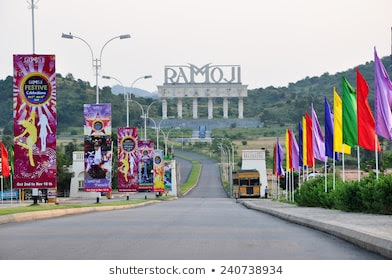
Ramoji Film city (RFC) is a”HEAVEN OF THE WORLD”and also wonder of world, Ramoji film city the thematic holiday destination in india with cine magic in R.F.C. Not only tollywood bollywood films made in RFC but also HOLLEY WOOD FILMS and daily serials of tv made in ramoji film city
Ramoji film city is a beautiful place and providing variety of options to explore including adventure rides different type of garden.Every person of world must visit RAMOJI FILM CITY in their life,RFC given lot of fun exiting entertaining happiness not only film making it also entertain to people , RFC largest integrated film studio complex in the world, the place is splendor and popular family gate way
LOCATION
Ramoji film city located northern part of deccan plateau in rangareddy dist in Hyderabad Telangana state, in India RFC CONNECTED BY NATIONAL HIGH WAY 65 ramoji film city 25 kilometer near by hyd
LATITUDE LONGITUDE
17.2543 NORTH LATITUDE
78.6808 EAST LONGITUDE
MSL( mean sea level)
Ramoji film city located 536 meter OR 1758 ft above sea level
CLIMATE
The climate of Hyderabad or Ramoji Film city features an arid climate. The days are hot and dry, usually rising to extreme highs of 40 °C (104 °F), while the nights are cool and breezy. Winds usually bring along clouds of dust, and other people prefer staying indoors within the daytime, while the breezes in the dark are pleasant and clean.
In recent years Hyderabad has seen heavy downpours. In February 2003, Hyderabad received 105 millimetres (4.1 in) of rain in 12 hours, thanks to a sudden global climate change .The years 2006, 2007 and 2009 saw close contenders to this record rainfall.
Winter lowest temperature within3.3 °C (37.9 °F), recorded on January 21, 1973.
Winter highest temperature in winter was 38.2 °C (100.8 °F), recorded on February 16, 1993.
spring highest temperature of spring was 46 °C (115 °F), recorded on April 2, 2002,
spring while rock bottom 12 °C (54 °F) was recorded on March 7,
summer highest temperature recorded in summer was 49.5 °C (121.1 °F), recorded on 19 June 2016,
summerwhile rock bottom 19 °C (66 °F) was recorded on May 4, 1989.
Atoms very best temperature 36.9 °C (98.4 °F) was recorded on October 8, 1987,
Atmos lowest temperature was 6.7 °C (44.1 °F), recorded on 28 November 1966.
Rainfall in Ramoji film city The average annual rainfall (January to December) for Hyderabad is 136.1 millimetres (5.36 in).The
highest annual rainfall was 455 millimetres (17.9 in), recorded in 2006.The average monsoon rainfall for Hyderabad is 100 millimetres (3.9 in)
“If you art lover you must visit khajuraho once in your life time”
“The central theme of these temple focus on Hindu philosophy “life reflecting the four aspect dharma ,artha, Kama , moksha “
“There is some thing that visible some thing that is suppressed and some thing is invisible and when you find these three you must understand of khajuraho temple your life is become complete”
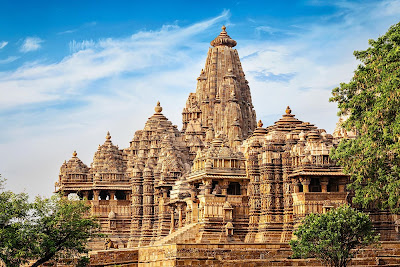
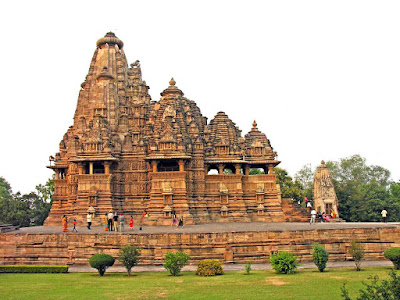
Khajuraho temple a group of monuments of Hindu and Jain religious in khajuraho belongs to 85 temples in this site its spread over 20 square kilo miters .These temple were built between ( 950 CE to 1050 CE ).The khajuraho temples are famous for nagara style and architecture symbolism and erotic sculpture .These monument mostly were built in chandeladynasty . In 85 temple today 22 temple survived( founded)
These temple are extraordinary human creative awarded by world heritage site
In 1986 these are found UNESCO ( united national education scientific culture organisation world heritage site
These are symbol of architectural magnificent disciple the height of artistic excellence reached by the artificer in ancient India. Khajuraho group of temple dedicated my two religion Hindu and Jain
LOCATION
Khajuraho temple monument are located in vindhya mountain range in central India these monument located i chatrapur dist madhya pradesh state in India .The rock bed of chhatarpur khajuraho located is bundelkhand iglesias and beloved that the oldest rock in India
LATITUDE AND LONGITUDE
24.8318452 north latitude
79.9198549 east longitude
MSL ( MEAN SEA LEVEL)
Khajuraho’s elevations 283 meters above sea level or 928 sq ft
HISTORY ABOUT KHAJURAHO MONUMENT
Khajuraho monument were built during the rule of chandela dynasty .The khajuraho temple mainly Hindu and Jain religious temple these temple were built Hindu king yasovarman and dhanga .In khajuraho kandariya mahadeva temple largest and currently mostly famous temple in khajuraho there 85 temples these temple were mostly completed between 970 to 1030
In the between 10 to 12 centuries khajuraho is capital of jajahuthi dynasty . Where khajuraho located that called central india these central India mostly control by Islam dynasty 13 to 18 centuries . In this period some temple were desecrated followed by long period temple were neglected
In 1830 local Hindu guided a British surveyor t.s Burtrediscovered by global; audience
Alexander cunningham after few years rediscovered khajuraho temple monument
Khajuraho mean date palm ancient local legends held that Hindu deity Shiva and other gods enjoyed visiting dramatic hill formation khajuraho area
Local legend state that temple complex had 64 water bodies of which 56 have been physically identify by archaeologist
AMAZING ARCHITECTURE OF KHAJURAHO
All temple except(one)chaturbhuja model and face s sun rise
Another symbolic feature that is predominited in hindu temple the relative lay out of temple integrated masculine and feminine deities and symbol highlight
the art work symbol highlight four goals of life proper in Hinduism chethurvida purshardalu (DHARMA ARTHA KAMA MOKSHA)
In surviving temple
6 temple dedicated to Shiva
8 temple dedicated Vishnu and his effeminate
1 temple dedicate Ganesha
1 temple dedicate to sun
3 temple dedicate to Jain tirthankar
The temple have a rich disciple of intricately carved status while they are famous for erotic sculptor sexual theme cover less then 10%of temple sculptor
The art cover numerous aspect human life
The khajuraho temple were built vastu purusha mandala
Mandala mean—- circle
purusha mean—–universal essence at the care Hindu tradition
Vastu mean ——-dwelling structure
The temple divided in to three geographical division
western temple
eastern temple
southern temple
Khajuraho temple made with sand stone and granite stone foundation.Khajuraho temple belongs to vaishnavism saivism (Hinduism)and Jainism
In khajuraho mostly major temple surround by smaller temple
The largest surviving temple in khajuraho Shiva temple its khandariya and Vishnu temples chaturbhuja
KHAJURAHO TEMPLE FAMOUS FOR
Khajuraho temple feature a variety of art work of which 10%is sexual or erotic out side and inside the temple .The temple have two layer of the wall . On the temple walls several thousand of statues and great art work
Mainly kandariya temple decorated 870 statues 10% of them various sexual possess
However the Kama art represented diverse sexual expression different human being ‘ if your art lover you must visit khajuraho once in year life’ Its the Indian largest group of medieval Hindu &Jain temple
The central theme of the these temple focus son the Hindu philosophy life reflecting the four aspect (dharma artha Kama moksha)
Erotic sculpture permanent in comparison in the rest of sculpture we need to pay attention to find and understand these
DANCE FESTIVAL
Every year dance festival conducted at khajuraho in the month of feb & mar in this festival number of visitors including international visitors visiting khajuraho
VISITING DAYS AND TIME
Temple open every day in week opening time 8;00am to 6;00pm
Entry ticket
otherthen\saarc/bimstec——–Rs600
below 15 years free
Indian citizen ———————Rs 40
Citizen of saarc / bimstec——–Rs 40
MUSEUM ENTRY
Museum open every day except friday timing 8’00 to 5;00 pm
Indian saarc bimstec——–Rs10
foreign citizen—————Rs 250
LIGHT AND SOUND SHOW CONDUCTED
Light and sound show conducted in two language english and hindi this show timing difference in seasons
winter show 6;30 pm to 7;25 ` oct to feb
summer show 7;30 pm to 8;25 mar to sep
10.ENTRY FEE FOR LIGHTING SHOW
Indian citizen ————-Rs 250
foreign citizen————Rs 700
below 5 years children free
NEAR VISITING PLACES TO KHAJURAHO
Panna national park —————92 km
Ranesh fall————————–21 km
Ken gharial sanctuary—————20 km
Ajaygarh fort————————-65 km
Benisagar dam————————2.3 km
DISTANCE FROM KHAJURAHO TO INDIAN CITIES
Delhi——————–651 km
Bhopal——————375 km
Lacknow—————309 km
Agra———————431 km
Hydrabad—————-1037 km
Jaipur———————623 km
Mumbai——————1146 km
NEAREST AIR PORT TO KHAJURAHO
Lucknow international air port—————-235 km
Kanpur airport ———————————182 KM
Jabalpur airport———————————183 km
Allahabad—————————————-195 km
Gwalior air port———————————-235 km
Nagpur airport———————————–427 km
Khajuraho airport——————————4 km
Railway station near by khajuraho——— khajuraho railway station 0.5 km
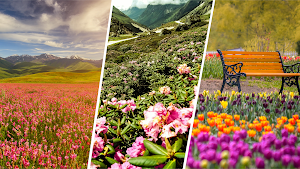
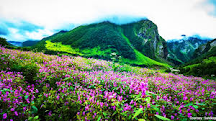
Valley of Flowers is one in every of the foremost stunning places to go to in India. it’s visited by tourists, pilgrims likewise as journey seekers. Who are the nature lovers must visitflowers of valley in once their life time , it’s currently a United Nations agency World Heritage web site. it’s settled within the middle of tall mountains and is legendary for its Brobdingnagian meadows that have many types of rare and exotic flowers and varied forms of flora.
Valley of Flowers trek is very asked for by trekkers, botanists, photographers, foreign tourists and journey seekers alike. it’s conjointly visited by pilgrims
The natural depression of Flowers is one in every of the foremost mesmeric places on earth and guests have represented it as nothing wanting paradise on earth.
Valley of flowers are a few things that can’t be explained by words or pics, it’s a little heaven in itself wherever you go all calm and silent. you only forget everything else amidst the delicate fragrance of the flowers. I recently visited depression of flowers and Hemkund Saheb trek and each were out of world experiences.
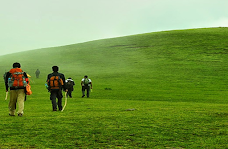
colourful flowers in little thickets, that was simply a glimpse of a spectacular flick. when trekking for concerning four hours including crossing heavily gushing rivers and steep terrains every now and then we have a tendency to reached the depression and were left feeling excited. With a light breeze taking part in and heat daylight falling on flowers created North American country all quiet. we have a tendency to were all soaking the wonder, there have been flowers throughout the depression of various colours, purple bell blossoms lined an area of depression and alternative was lined white flowers that were sort of a cauliflower bunches. on the means we have a tendency to found red and orange hued flowers in vast numbers, pink and blue forget American state not flowers were scattered everywhere! there have been alternative reminder pink and lavender flowers and bright yellow flowers, blue berries, inexperienced bell flowers. everyplace there have been flowers and inexperienced meadows and streams flowing through the depression.
purple bell blossoms and enjoyed the various views of the depression. A documentary was vie on a daily basis before in Ghangaria that consisted of various sorts of flora employed in Ayurvedic medicines, we have a tendency to were able to spot some within the depression.
Blue poppy may be a dangerous flower that we have a tendency to noticed on the thanks to Hemkund Saheb. Locals wise to North American country that intense its flowers and leaves (which may be a ligneous plant basically) can cause immediate death.
It is price a visit once in an exceedingly life, it didn’t appear as if the photograph place up below thus do not expect and be foiled. each bunch of flowers grow at the various times throughout the blooming season. however certainly the depression floor is roofed by at least five completely different coloured stretches of flowers throughout the season .
Location of Valley of flowers
Valley of Flowers National Park is located in North chamoli and pithoragarh in the state of uttarakhand in India
geographically valley of flower located at Himalayan mountain range
north part of India
Latitude and longitude
30.44 North Latitude
79.38 East Longitude
Msl or Elevation
Elevation or mean sea level of valley of flowers
is 3352 meter to 3658 meter or 12001 ft above
sea level
Climate of Valley of flowers
Being AN inner mountain range natural depression, the Nanda Devi Basin includes a distinctive micro-climate. Conditions square measure usually dry with low annual precipitation, however there’s significant monsoon rain from late Gregorian calendar month to early September. Prevailing mist and low cloud throughout the monsoon keeps the soil dampish, thus the vegetation is lusher than is common within the drier inner mountain range valleys.
From middle Apr to Gregorian calendar month temperatures square measure moderate to cool down (19 °C maximum). The natural depression of Flowers additionally has the micro-climate of an internal inner mountain range natural depression, and is protected from the complete impact of the southwest summer monsoon by the larger Himalaya vary to its south. there’s usually dense fog and rain particularly throughout the late summer monsoon. each Basin and natural depression square measure typically snow-bound for 6 to seven months between late Oct and late March, the snow accumulating deeper and at lower altitudes on the shadowy southern than on the northern facet of the valleys
Valley of flowers in rain season
July to August, you can view the valley’s panoramic beauty. With a maximum temperature of 17 degrees Celsius (average) during the days, it’s a good time for your visit.
Most of the flowers are in full bloom between July and August. During these months, the maximum temperature won’t exceed 17 degree Celsius in the daytime. The nights are also expected to be pleasant. Post sunset, you can expect the temperature to be anywhere between 6-8 degree Celsius.
Valley of Flowers in Summers:
June to October have a cool climate with most extreme temperature spans to about 17 ℃ and is a decent season to review all-encompassing magnificence.
Valley of Flowers in Winters:
November to May is snow secured and hard to visit the outside attractions. Least temperature can run well down with normal least around 7 ℃.
Best visiting Time
The vale of Flowers is barely open from the start of June till the start of October, as it’s lined in snow the remainder of the year. the most effective time to go to is from middle Gregorian calendar month to middle August, once the flowers square measure fully bloom when the primary monsoon rain.
Local language
Hindi
English
Mobile Network availability Flower valley
Bsnl
Airtel
Jio
Idea
Vodafone
Important facts concerning depression of flowers
Location : close to Badrinath, in Garhwal Region of Uttarakhand.
National Park : it absolutely was declared as parkland in 1982.
World Heritage website : Declared as World Heritage website on July fourteen, 2005 by UN agency.
Best time to go to : July and August
Entry Fee: Rs. one hundred fifty for Indians and Rs. 650 For non-Indians
Entry Timings : seven am to five pm
Opening Date : first Gregorian JUNE 1 calendar month
Closing Date : fourth October
Time required for depression of flowers trek : seven days Ex Haridwar
reasons to visit the Valley of Flowers – Uttarakhand
Flowers, in their vast array, symbolize different things and emotions. Valley of Flowers invites tourists to experience the varied mountain flora and to get familiar with the language of flowers.
Here are the top 5 reasons to visit the Valley of Flowers national park this year:
Spiritual and Natural Beauty:
Valley of flowers is known for its impeccable beauty within and is also known for the beautiful region it is enveloped in. Hosting a hugely bio-diverse environment, people can enjoy nature at its best, which compels them to stop and admire.
The Trek Journey
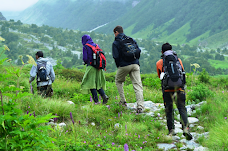
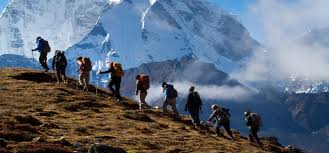
A zig-zag trail of 12 kilometres, Valley of Flowers offers a trek journey which generally is not considered very arduous and thus, is a great beginner trek for tourists. The majestic Himalayas, which form an incredible backdrop, make the trek all the more scenic and romantic.
Photography:
A tourist’s vacation or an adventure enthusiast’s journey is incomplete without various memories captured through photographs. The Valley of Flowers is indeed a photographer’s paradise. With breath taking landscapes and the oblivious horizon, this valley offers views a photographer can’t refuse to click.
Solo Travel – Budget Travelling:
Despite being located in a comparatively remote area in Uttarakhand, Valley of Flowers is one of the most accessible destinations for travellers. The route has a host to many reasonably priced hotels and other accommodations to stop over. Here, nature demands no charge to enjoy its beauty. Lose yourself in this destination without making a dent in your wallet.
No Pollution and Weather:
This site has no road connectivity. This means that there is no vehicular pollution in this part of the mountains. You breathe in clean air and feel rejuvenated. This is also why the trek doesn’t tire you. The splendid weather, which offers a blissful escape from the hot weather in summers, is very alluring and we guarantee you will definitely contemplate, at least once, on extending your stay here!!
Valley of Flowers National Park visitors Tips
Valley of Flowers is opened to public on 1st June per annum . The park remains open from the month of June to October.
Start early from Ghangaria to possess longer at hand once you are within the Valley of Flowers. It is a world heritage site and therefore you need to enter your names in the register, pay the entry fees and declare all plastic bottles you are carrying along.
Entry to Valley of Flowers opens at 7.00 am every day and last entry is allowed till 2.00 pm. You should start back around 1 pm so as to reach back by 5.00 pm.
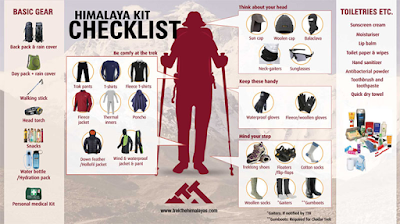
Carry extra pair of Socks, Torch, Poncho/Raincoats, Extra Batteries for your Camera
Through the Valley is gorgeous in May, June and September. But for maximum number of flowers in July and August are most preferred months.
Tourists should inquire about the weather and road conditions especially during the monsoons, before planning their trip to Valley of Flowers.
About valley of flowers
A sprawling expanse of 87 square kilometers within the Chamoli District of Uttarakhand, Valley of Flowers is about within the backdrop of the majestic Himalayan Ranges. This virtual paradise on earth has been unknown to the surface world till the good Mountaineer Frank S Smith discovered it within the year 1931
If words may describe the vale of Flowers parkland in Uttarakhand, then, enchanting, scintillating and charming would return pretty about to doing justice to its outstanding natural beauty. adjoin eighty seven.5 sq km, the bio-diversity hotspot is understood for its scenic beauty comprising alpine shrubs and meadows, milklike white streams, snow-covered peaks and pristine air.
Located within the higher reaches of Bhyundar vale close to Joshimath in Chamoli district of Garhwal region, the rolling landscape of the parkland stands in stark distinction to the rugged mountain geographical area of Nanda Devi parkland to the east.
Valley of Flowers and Nanda Devi parkland, together, represent the Nanda Devi region Reserve.
The vale of Flowers was declared a parkland in 1982 and was enclosed within the list of World Heritage sites by United Nations agency in 2005.
At first referred to as Bhyundar vale, the nature’s marvel was renamed in 1931 by British mountaineer Frank S Smythe. However, the vale was celebrated to the locals WHO used it as a pasture for his or her Bos taurus.
The vale was discovered once British mountaineer Frank S Smythe chanced upon it in 1931 whereas arriving from Associate in Nursing expedition to Mount Kamet.
He named the place vale of Flowers and conjointly wrote a book with a similar name. the best purpose of the park is Hindu deity Parbat, regarding 6719 meter on top of mean water level.
The vale of Flowers is additionally believed to be the place from wherever Hanuman brought the charming herb to resuscitate Lakshman within the Hindu epic Ramayana.
The legend still holds worth as many folks still believe that Sanjeevani, the charming herb, continues to grow within the park. Still pristine and fascinating, there area unit alternative legends related to the park.
Locals believe it’s the playground of fairies which they descend to the vale within the absence of humans.
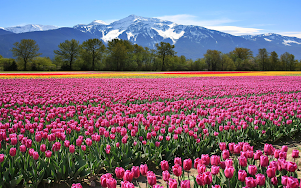
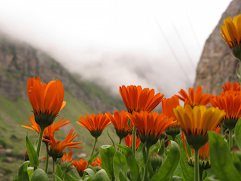
The sight of a full vale coated with flowers of each hue and color will so provides it a charming quality. over 650 species of flowers as well as Brahmakamal, poppy and elapid snake liliaceous plant are often found within the park.
The vale of Flowers presents a distinct look every day once it becomes accessible from might to Sep.
There are not any human settlements within the parkland and grazing has been utterly illegal.
The vale is accessible from last week of might when the snow melts. when the snow melts and therefore the monsoons begin,
The plants begin to bloom in Gregorian calendar month and August. In Sep, the plants steel oneself against over eight-months of hibernation. By the tip of Sep, the vale is once more carpeted underneath snow.
This richly various space is home to rare and vulnerable animals, as well as the Asiatic black bear, Panthera uncia, Ursus arctos and blue sheep.
The vale is additionally home to many fauna like Himalayan deer, marten, Panthera uncia, blue sheep, black and brown bears. you’ll conjointly notice a large type of birds here, like Himalayan bird of Jove, snow partridge, Himalayan snow cock, Himalayan pheasant, snow columbiform bird and sparrow. various species of butterflies and insects can also be found here.
Absence of road property has helped save the pristine nature of the park. Trekking or riding a mule’s back is that the solely thanks to reach the vale of Flowers. Joshimath, the closest city, may be a fashionable pilgrim’s journey because it is that the winter abode of Lord Badrinarayan and conjointly the seat of the maths (monastery) based by Adi Shankaracharya.
A world heritage site, the valley is situated at a really remarkable area, which is that the conversion point of Himalayan ranges of Western and Eastern Himalayas. This fairyland located in the high altitudes of Himalayas is protected by snowy mountains. Bounded by the magnificent mountain ranges and glittering glaciers, this place unfolds the charisma and charm of nature at its best.
Unspoiled by human invasions this imposing land lay froze within the colder months, and burst into its majestic boom on the arrival of hotter months. During these months the valley sheds its somnolent nature with its multitudes of exotic flora. When the monsoon clouds began to drizzle, the valley shows its flowery face and therefore the entire region would glisten sort of a colourful carpet.
A scenic place where the character blooms with its entire vista are often accessible by a tedious but lovely stroll. Eye catching spectacles just like the cascading waterfalls, small streams and in particular the flowery meadows awaits the visitors during the way. With the flamboyant paddocks, crystalline streams and majestic peaks, this baroque of flowers is a worthy watch spectacle.
Also witness the wildlife in national park: Lime Butterfly, gray langur, flying phalanger , Himalayan black bear, red fox, Himalayan weasel.
Valley Of Flowers In July:
In July expect a great deal of leafage. you may additionally notice a small amount of snow until rains begin fully swing. however there won’t be several flowers till mid-July. Since the trek climbs to such a high altitude (~14,000 ft), it retains snow even in July. solely later in July, the rain washes off the snow.
Monsoon additionally starts setting in in July. however it doesn’t rain a lot of within the half. Monsoon gains momentum within the half of July. Snow too starts obtaining washed off by then.
The depression Of Flowers starts blooming – within the true sense – from mid-July forrader. And if there’s a favorite time to try to to this trek, it’s to be from mid-July to period.
Epilobium Laxum of the herb family fully bloom between July and August. image by Gourab Nandy
Depression Of Flowers In August:
In August, monsoon clouds suspend low and wash over the complete depression. most flowers within the depression bloom throughout this era. whereas you get an honest quantity of rain at Govindghat throughout this point, at the upper altitudes it turns into a drizzle.
Tip: be careful for the dear Brahmakamal as you climb to Hemkund European. This stunning flower solely grows round the altitude of fourteen,000 feet thus may be a rare observance.
Even the crowds aren’t serious throughout the initial days of August. This makes it an ideal time to explore the depression blooming with flowers.
Depression Of Flowers In September:
Flowers begin wilt by the half of August and by Gregorian calendar month only a few flowers ar left. however there’s a unique quite beauty to the present month of retiring monsoon. Skies begin clearing up and you witness some clear mountain views.
Valley Of Flowers-September
Valley of Flowers in Gregorian calendar month. image by Gourab Nandy
But Gregorian calendar month is additionally the time once the gang within the depression starts thickening, throughout this month, pilgrims flock to go to the Gurudwara of Hemkund European.
Note: throughout peak monsoon, create it a degree to go to the depression of Flowers within the half of the day and be back by two pm. Post that, the intensity of the rain will increase. which makes it risky to cross the wonky bridges over Lakshman Ganga.
Trekking at flower of valley
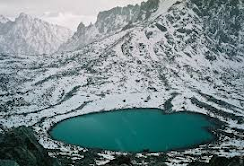
The most stunning of all chain of mountains flowers, the blue primrose are often seen blooming in thousands within the depression. the most effective time to visualize the depression fully bloom is from mid-July to period. to achieve the depression one needs to trek from Govind steps, on the route to Hemkund European, up to Ghangaria, twelve metric linear unit ahead. Few furlongs before Ghangaria the trek route to the depression takes a detour towards left. The depression is concerning five metric linear unit from Ghangaria. The high altitude amino alkanoic acid lake, referred to as Hemkund ( 4300m/14,100ft) lies in heavenly surroundings. A steep trek from Ghangaria leads one to the present spot in concerning four to 6 hours. it’s a crucial pilgrim’s journey for each Hindus and Sikhs, further as for folks from alternative faiths. there’s a Sikh Gurudwara and a Lakshman temple engineered on the bank of the lake. Encircled by seven snow-covered peaks and their associated glaciers, it reflects its surroundings enthrallingly on its crystal clear serene waters. The glaciers from Hathi Parvat and Saptarishi peaks feed the lake and a little stream known as Himganga flows out of this lake. As alluded to, within the holy sacred text, Guru Gobind Singh, the tenth Guru of the Sikh religion had meditated on the bank of this lake in one in all his earlier births. it’s wide believed among Sikhs that Guru Gobind Singh introduced the options currently universally related to faith. On fifteenth Apr 1699, he started the new brotherhood known as the faith (meaning the pure, from the Persian word ‘Khales’) associate inner core of the trustworthy, accepted by sacrament (Amrit). The 5 K’s’ go back this period: kesh (uncut hair) kangha (comb), dagger (dagger or short sword), Kara (steel bangle), and kachh (boxer shorts).
Brief Itinerary of trekking
1- Haridwar to Joshimath
Distance- 275 metric linear unit, Altitude 1,900m/6,200ft.
Pick up from Haridwar terminus parking at 6:00 AM
Driving Time-10-11 hrs.
Last ATM purpose accessible in Joshimath.
Market accessible in Joshimath.
Networks accessible right along the manner.
Guest house keep (Shared Accommodation).
Route
Haridwar to Rishikesh
Rishikesh to Devprayag (confluence of Bhagirathi watercourse and Alaknanda river)
Devprayag to Srinagar
Srinagar to Rudraprayag (confluence of Mandakini watercourse and Alaknanda river)
Rudraprayag to Karnaprayag (confluence of poet watercourse and Alaknanda river)
2- Drive Joshimath to Govindghat -Pulna and Trek to Ghangaria
40 metric linear unit twenty minutes, Govindghat to Pulna (2,000m/6,800ft).
9 metric linear unit four hours, Pulna to Ghangaria (2,290m/9,800ft).
Gradual ascent on a stone-paved path, all the manner on the watercourse.
Water is out there on the route.
Packed lunch are given.
Mule and porter facility is out there from Pulna.
BSNL network accessible at Ghangaria.
Helicopter service accessible from Govind steps to Ghangaria and fro given that weather permit (Not included).
Stay in guest house (Shared Accommodation).
Note worthy Site: Govind Dham Gurudwara, Govindghat; Hemkund Gurudwara base, Ghangaria; depression of Flowers info Center; Ghangaria
3- Ghangaria to depression of Flower and back to Ghangaria
Altitude- three,500m/11,500ft.
Distance- four metric linear unit, each way.
Trek Time- seven hours.
The depression is 6-7 metric linear unit long, ends with a ice mass.
Mixed incline until the depression followed by level walk on piece of ground.
Can refill water bottles from streams on the manner.
Packed lunch are given, no food accessible within the depression.
Camping within the depression isn’t allowed, can’t keep when sunset.
Night keep in Guest house (Shared Accommodation).
Prominent flowers:- Meconopsis betonicifolia, Snake Foil, White Leaf Hog Foot, chain of mountains Rose, grassland herb, Dog Flower, Hooked Stick Seed, and watercourse Anemone.
4- Ghangaria to Hemkund European and back to Ghangaria
Altitude- four,300m/14,100 ft.
Distance- five.5 km, each way.
Trek Time- seven hours.
Gradual and steep mixed ascent on a support welled stone-paved path.
Mule ride service is out there until Hemkund European.
Can refill water from road facet dhabas.
Hot lunch at Gurduwara langar.
Brahma Kamal, chain of mountains Meconopsis betonicifolia are often seen on the thanks to Hemkund European.
Night keep in Guest house.
5- Ghangaria to Govindghat and Drive to Joshimath (Badrinath optional)
Distance to Govind Ghat- thirteen metric linear unit
Trek Time-5 hours
Driving Time- twenty minutes
Packed lunch
Guest house keep
Note- GovindGhat to Badrinath is landslide prone space in monsoon time thus if our leaders realize that your safety is in risk because of we tend toather condition/ landslide or road blockage then we shall skip Badrinath altogether and drive to Joshimath directly.
6:- Joshimath to Haridwar
After Morning Tea/Coffee, Depart to home.
you’ll reach Haridwar between half dozen -7:00 pm. you’ll be able to book additional travel any time when 8:00 pm.
Who Can Go
The first timer will apply, ought to have some interest in trekking and mountain climbing
The climber should be work and have decent stamina to hide five metric linear unit of distance in forty five minutes while not a stress
The climber ought to be able to carry a ten kilogram backpack
Heart drawback, high pressure level, asthma, and brain disorder can’t be reconciled on this mission. The climber should not have the conditions mentioned higher than
Valley Of Flowers Trek In July-August-September:
July
It is lush inexperienced. The flowers area unit simply getting down to bloom. Peak flowering season starts when mid-July. There area unit a couple of recent snow bridges and a few melting snow patches. Expect a riot of colors. Rains acquire when mid-July. The depression is least jam-pawncked in Gregorian calendar month.
August
The initial fifteen days of August see a large variety of flowers tho’ there’s a decent quantity of rain at Govindghat. however at higher altitudes, it’s not continuously significant. It’s jam-pawncked around weekends. however on weekdays you don’t got to worry concerning crowds.
September
Flowers have limp by currently and depression is swelling with a crowd of pilgrims.
Check list to treak
Cost& Terms
Inclusions :–
Accommodation. (Guesthouse, Homestay,).
Meals whereas on trek (Veg. + Egg) from Dinner on Day one to Dinner on Day five.
All necessary entry fees and permits.
attention Medical Kits and gas Cylinder.
mount qualified & skilled Trek Leader, Guide, Cook and Support workers.
TTH workers Insurance.
Porters/mules to hold central instrumentality.
Transport Haridwar to Govindghat and come.
Exclusions :-
Food throughout the transit.
Insurance.
Mules or porter to hold personal bags.
something not specifically mentioned underneath the top worth Includes.
Any quite emergency evacuation charges
Any quite personal expenses.
Note: commonly TTH expect to hold your personal bags on your own, if you want to dump your backpack, you’ll be able to provides it to Mule.
Charges of offloading backpack:-
INR 500/- if you create a web payment, ten days earlier
INR 700/- if you inform US once reaching Joshimath
The backpack cannot weigh over eleven kgs. Backpack ought to have waterproof cowl. Suitcases/strolleys/ baggage won’t be allowed.
To book a Trek/ journey program please use our on-line booking kind or, instead, you’ll be able to decision US on the given for confirmation of tour you’ve got to wire a deposit and initial deposit.
Paying the Trek/ journey activity fee:
The fee may be paid by on-line transfer/check deposit/ demand draft. Instruction for payment are going to be forwarded in conjunction with your confirmation email. once your transfer is finished, please e-mail US a confirmation mail along with your transfer details, so we are able to follow up your reservation with efficiency.
When to book:
it’s knowing create your booking a minimum of 2 months earlier. However, if you would like a decent deal on your domestic/international flight, we have a tendency to suggest organising your stopover at least 5 months earlier. (Please contact US if you need a late booking)
In the event of cancellation of trek
/adventure activity services because of any evitable / ineluctable reasons we have a tendency to should be notified of identical in writing. Cancellation charges are going to be effective from the date we have a tendency to receive recommendation in writing, and cancellation charges would be as follows: –
Cancellations before twenty four days from the beginning of the trek
Book the other trek until one year or get ninety fifth refund
(Note: If the trek charges ar additional, the balance must be paid by the trekker)
Cancellation between twenty four days and fourteen days to the beginning of the trek
Choose to opt for identical trek, with the other batch, until year or get seventieth refund
Cancellation between fourteen days and ten days to the beginning of the trek
Choose to press on identical trek, within the same season, with the other batch or get five hundredth refund.
Cancellation but ten days to the beginning of the trek
Transfer your trek (same trek, same batch) to your friend. No money refund.
Note:–
1)- modification of trek batch depends on the provision of seats within the batch.
2)- just in case of transferring a trek to a follower, he/she ought to satisfy all the necessary necessities advance by TTH.
3)- TTH holds the proper to change/cancel the policies, while not previous notice
visiting near by valley of flowers
The Valley of Flowers park may be a central region of the Nanda Devi Biosphere Reserve. British alpinists Franks S. Smythe and R.L. Holdsworth accidentally stumbled upon this area after a fruitful voyage of Mount Kamet in 1931.
A UNESCO World Heritage Site, it’s lauded world over for its seasonal fields of blooming flowers and surrounding beauty.
Here is that the list of the simplest tourist places to go to within the Valley of Flowers.
Hemkund Sahib
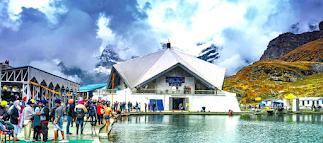
Home to the Sikh Guru Gobind Singh, the term Hemkund factually means ‘Lake of snow’ and therefore the spotless water of this lake is icy cold. it’s situated at a height of 4,329 metres above water level between snowy mountaintops, jointly named Hemkund Parvat. A star-shaped Sikh Gurudwara next to the lake is another star attraction, making this one among the simplest tourist places to go to .
Ghangaria
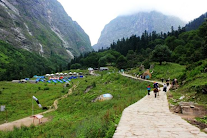
It is the last area with human inhabitants on the road to Hemkund Sahib and therefore the Valley of Flowers. A picturesque village hovering at a height of three ,050 metres above sea-level, it’s 13 km from Govind Ghat and 4 km from the Valley of flowers. it’s surrounded by beautiful waterfalls and mountains on all sides. However, the world is exposed to heavy snowfall and thus is open only from May to October.
Gaurikund
Gaurikund marks the beginning of the 14 km trek to the holy memorial of Kedarnath. it’s located at an altitude of 1,982 metres above water level . the world and therefore the Gauri Temple is known as after Goddess Parvati, wife of Lord Shiva. supported Hindu Mythology, this is often the spot where Goddess Parvati administered her atonement including austere and yogic exercises to win her husband over.
Bedni Bugyal image
Bedni Bugyal may be a celebrated Himalayan Mountainous pasture, located at an elevation of three ,354 metres (11,004 feet) in Uttarakhand. The trek to Bedni Bugyal and Ali Bugyal involves passing through plush green area, coniferous woodlands latched onto hillocks and sharp hikes. Bedni Kund in Bedni Bugyal may be a significant religious destination for the locals.
Badrinath Temple
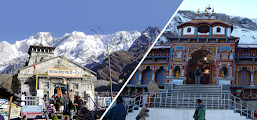
Badrinath or Badrinarayan Temple, supported the banks of the Alaknanda River, within the hill station of Badrinath in Uttarakhand, may be a Hindu temple dedicated to Vishnu. the world forms one among four Char Dham spiritual journey spots, additionally to being one among 108 Divya Desams, divine memorials for Vaishnavites.
Govindghat
A small village in Uttarakhand, Govindghat are often found where the Alaknanda and Lakshman Ganga Rivers meet, approximately 22 km from Joshimath at 6000 feet above water level . The journey to Hemkund Sahib and Valley of Flowers begins here. Thousands of tourists , primarily Sikh travellers heading to the shrine of Hemkund Sahib and seasonal tourist to the Valley of Flowers, come to the present point daily.
Vasudhara Falls
Vasudhara Falls may be a beautiful waterfall found at Badrinath, 9 km away, elevated at 400 feet. it’s also 6 km faraway from the Mana Village, which is often accessible during the amount that Badrinath is opened to the overall tourists (May to October or November).
Lakshman Ganga River
Lakshman Ganga or Bhyundar Ganga passes through Bhuyandar Valley, from Hemkund Lake. It links up with the Pushpawati River. Smaller in size, it enriches the sweetness of the encompassing valley, with its origins going back to Lake Hemkund
How to Reach
By Air :-
Jolly Grant landing field is that the landing field serving Dehradun, placed regarding forty eight metric linear unit from the Haridwar. there’s a daily flight from Old Delhi for Dehradun, reach Haridwar sooner or later early if returning by flight.
By Train:-
An excellent rail network connects Haridwar to different vital cities like Old Delhi, Mussoorie, Mumbai, Varanasi, Lucknow, and urban center.
From Old Delhi -DDN NZM AC specific (2205)
From Kolkata- Doon specific (13009)
From Mumbai- Dehradun specific (19019)
From Chennai- Dehradun specific (12687)
By Bus:-
There square measure several regular bus services from Old Delhi to Haridwar, from Old Delhi ISBT Kashmere Gate. we might counsel taking solely government buses from ISBT Kashmere Gate. Usually, buses drop you at Haridwar coach station. From there you’ve got to return to Haridwar depot
Need any information contact admwondersindia@gmail.com